Key takeaways
- Protect belongings first and stop water damage from spreading.
- The stain is rarely directly below the entry point.
- Flashing, boots, valleys and skylights are the usual culprits.
- Sealant alone is usually only a temporary fix.
First steps
Move belongings, place a bucket and poke a small hole in a bulging ceiling to release trapped water safely. If water is near light fixtures or outlets, turn off power to that area.
Take photos of the damage and note when it started and what the weather was doing.
Tracing the source
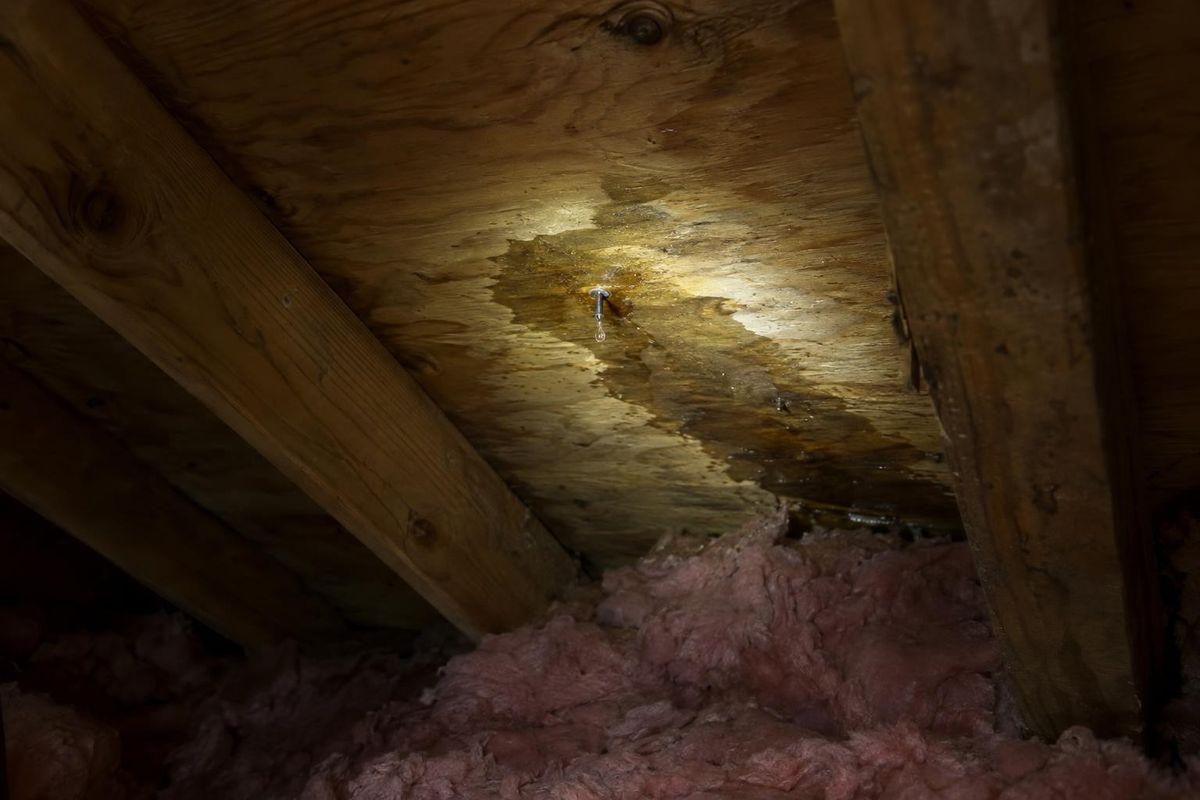
Water runs along rafters and drips from the first low point it finds, so the stain can be several feet from the leak. Look in the attic with a flashlight for dark stains, damp insulation and daylight, and follow the trail uphill.
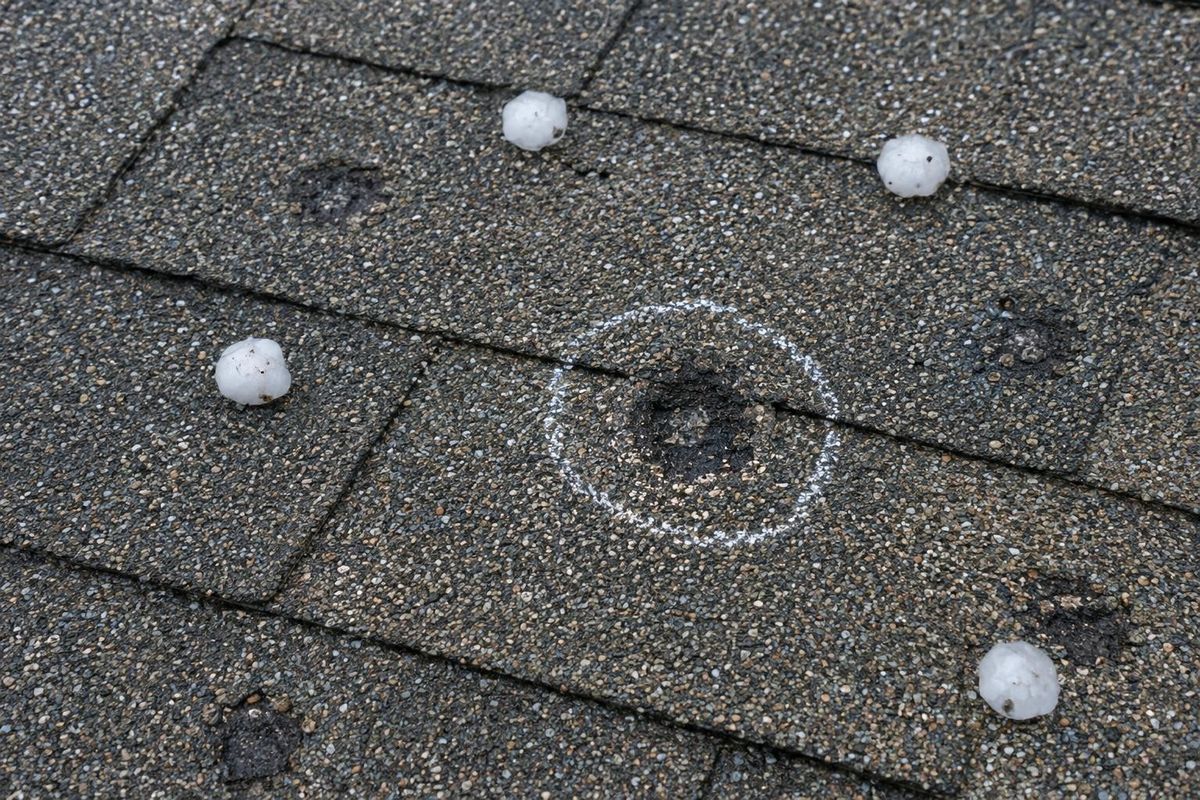
On the roof, check the likely entry points above the stain: flashing at walls and chimneys, pipe boots, valleys, skylights and missing or lifted shingles.
Common causes
Cracked rubber pipe boots, rusted or lifted flashing, failed sealant, nail pops, missing shingles and clogged valleys cause most leaks. Ice and wind-driven rain can push water past details that stay dry in normal rain.
Leaks that only show in heavy rain often point to flashing or valleys.
Repair or replace
A single entry point can be repaired. Several leaks, soft decking or widespread shingle failure suggest the roof is near the end of its life.
Ask for photos of the leak source and the repair so you know what was done.
Quick answers
Is roof sealant a permanent fix?
Usually not. Sealant dries and cracks. Replacing the failed flashing or boot is the lasting repair.
Why does my roof leak only in heavy rain?
Wind-driven or heavy rain reaches spots that stay dry in light rain, such as flashing, valleys and old nail holes.
Should I climb on the roof to look?
We recommend checking from the ground and the attic. Wet roofs are slippery, and a fall is a bigger problem than a leak.