Key takeaways
- Hail bruises shingles and removes granules long before leaks show.
- Wind lifts and creases shingles and strips ridge caps.
- Photos taken soon after a storm help every later conversation.
- A professional inspection finds damage you cannot see from the ground.
How hail damages roofs
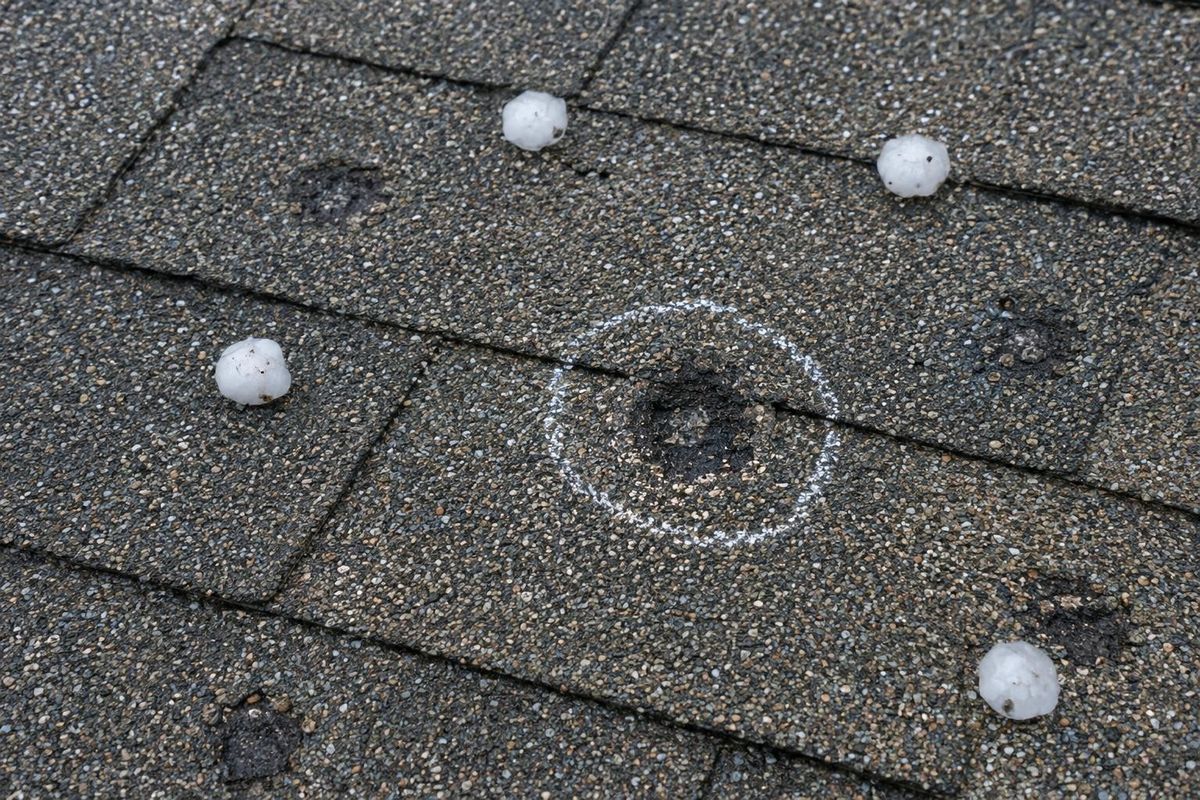
Hail strikes bruise asphalt shingles, knock off protective granules and can crack the mat underneath. The roof may not leak right away, but the damaged areas age faster and often fail months later.
Signs include round dark spots, granules in the gutters, dents in vents, gutters and metal, and spatter marks on surfaces.
How wind damages roofs
Wind lifts shingle tabs until the sealant strip breaks, then creases and tears them. Edges, ridges and corners take the most force, and once a section is lifted, the next gust catches it more easily.
Signs include shingles on the ground, creased or folded tabs, bare spots and loose ridge caps or metal edging.
What to document
Take wide and close photos from the ground, including gutters, vents, siding and soft metals. Note the date and time of the storm. Keep receipts for any temporary protection, such as a tarp.
A professional roof inspection adds close-up photos of each slope and a written summary you can share with your insurance company.
What to do first
Stay off the roof, protect belongings inside and cover any opening. Call an inspector rather than a door-to-door salesperson, and ask for photos and a clear written description.
Check your insurance policy for deadlines and deductible details, and ask your carrier what it needs from you.
Quick answers
How soon should I have my roof inspected after hail?
As soon as practical. Policies have deadlines, and early inspection catches hidden damage.
Are impact-resistant shingles worth considering?
They are designed to resist hail better, and some insurers recognize them. They are not damage-proof.
Can wind damage be repaired?
Often yes, if limited. Widespread damage may mean replacing a slope or the roof.