Key takeaways
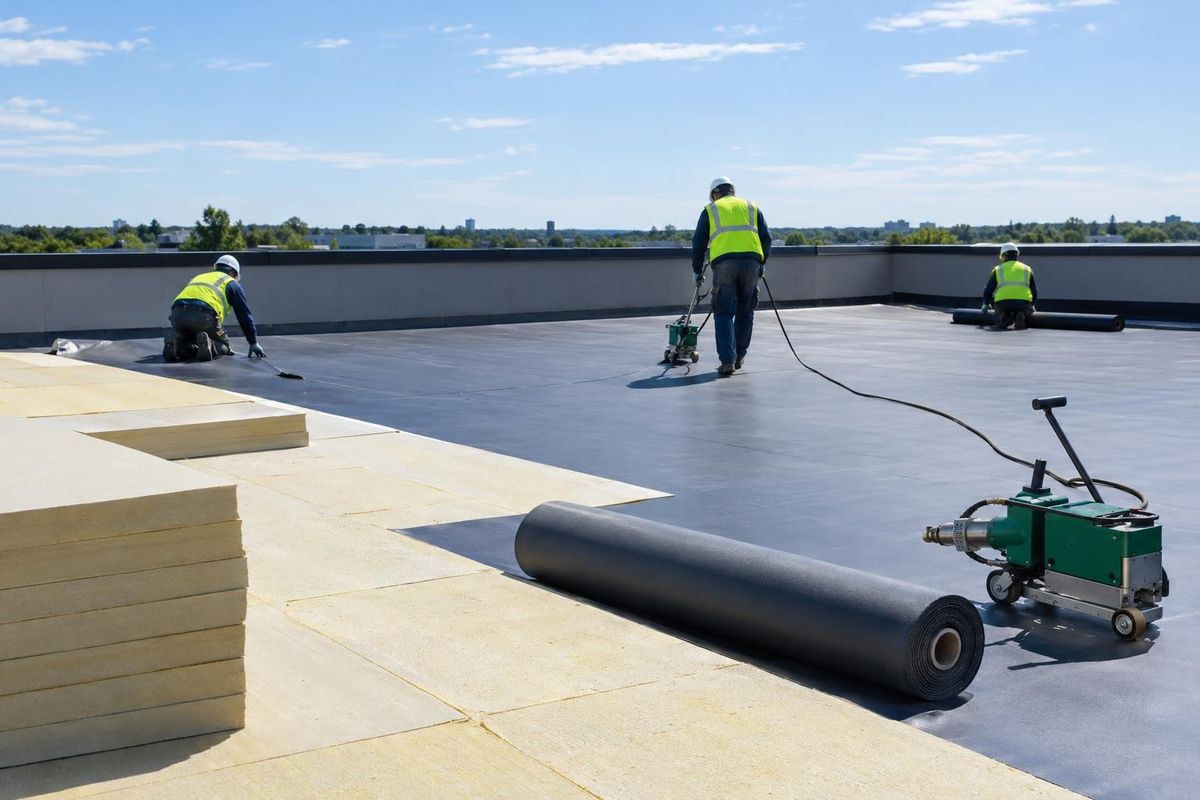
- TPO is white, reflective and heat-welded.
- EPDM is a rubber sheet with few seams that is easy to repair.
- Modified bitumen is a layered, rugged system.
- Drainage and details matter more than the material alone.
TPO
TPO is a single-ply membrane whose seams are welded with hot air. Its light surface reflects sunlight and it is common on warehouses, offices and retail buildings.
It performs best with careful detailing at corners, curbs and penetrations.
EPDM
EPDM is a synthetic rubber sheet that arrives in very large pieces, so a roof may have few seams. It is flexible in cold weather, easy to patch and a long-time choice for flat residential and commercial roofs.
Seams and flashings use tapes and adhesives that need correct installation.
Modified bitumen and coatings
Modified bitumen uses layered asphalt sheets with a granulated cap, giving redundancy and good traffic resistance. It can be installed by torch, hot mop or self-adhered methods.
Coating systems can restore an aging roof that is still dry underneath, sealing seams and reflecting heat.
Questions to ask
Is the insulation wet, and has it been scanned? How will water drain, and is tapered insulation needed? What is the seam and flashing method? What do the maintenance and inspection routines look like?
In Nashville and across Middle Tennessee, ask for photo documentation at each stage.
Quick answers
Which flat roof material is best?
There is no single best choice. Building use, budget, slope, equipment and foot traffic decide.
Can I coat my flat roof instead of replacing it?
If the insulation is dry and the membrane is sound, a coating can be a good option. A moisture scan tells you.
How often should a flat roof be inspected?
At least twice a year and after major storms, with drains and seams checked each time.